Becoming a Docent
What the Museum offers you:
§ The opportunity to learn about the history of our roads, and of one of the oldest tollgate cottages (circa 1835) surviving anywhere in Canada, and its surrounding neighbourhood.
§ The chance to improve your public speaking and interpretive skills.
§ The occasion to work with a fine group of dedicated volunteers in a convivial setting.
§ The chance to help preserve local history by educating visitors to the Cottage
What the Museum asks of you:
§ To learn about the Cottage with the help of our docents, and our library of information. We have lots of interesting reading material!
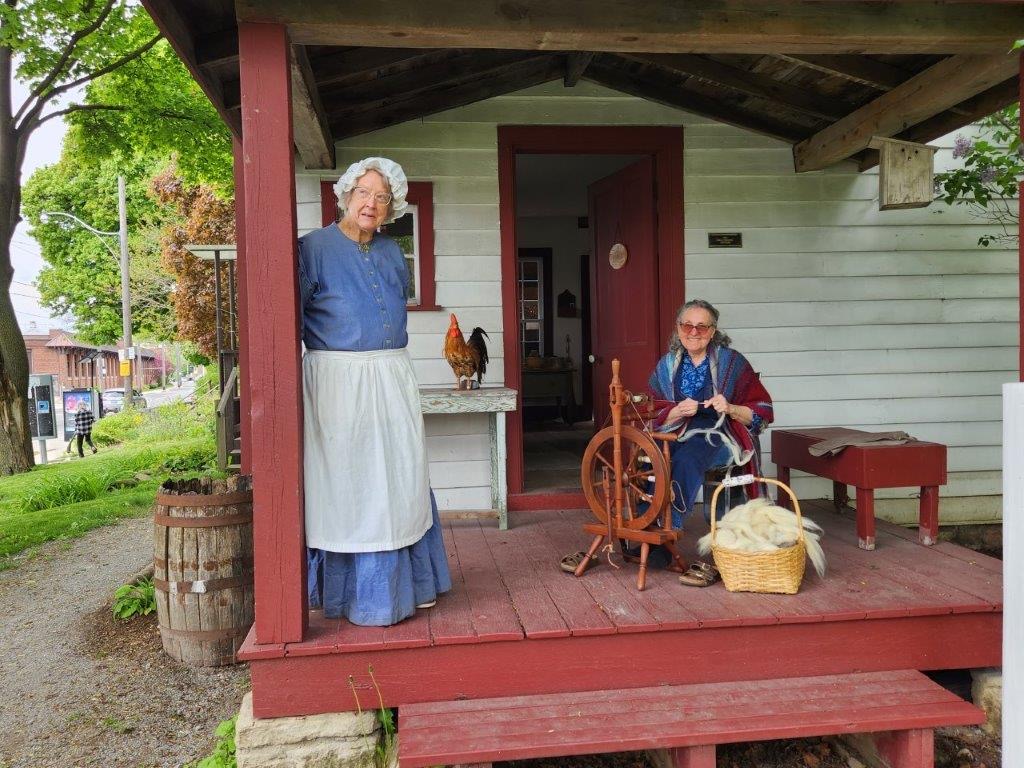
§ It would be great if you could make your own ‘period dress’ (we don’t call it a costume!), but lots of help is available! Don’t be put off if this is not in your skill set!
§ To spend about one Saturday a month shadowing the present docents, until you are ready to lead tours of the museum on your own.
DOCENTˈdōs(ə)nt — definition: a person who acts as a guide, typically on a voluntary basis, in a museum, art gallery, or zoo.
We’re on the lookout for a reliable, enthusiastic person who loves history and enjoys sharing it. We’d like you to be available for one or two Saturdays a month from noon to 4:00 pm, or one Sunday per month from 1:00 – 4:00 pm. (cottage closed in Jan) Let us know at tollkeeperscottage@gmail.com.
What is it like to be a docent
To learn about our summer docent experience, our summer docent Annie Prionas is interviewed by our journalist volunteer, Den Hanagan with a few of our books ready for the upcoming Book Sale. Take a look at the interview by clicking here to find out more about how Annie describes her experience this summer at the Tollkeeper’s Cottage and see if this is the kind of thing you’d like to do.
Other ways to lend a hand
Twice a year, usually a weekend day in spring and
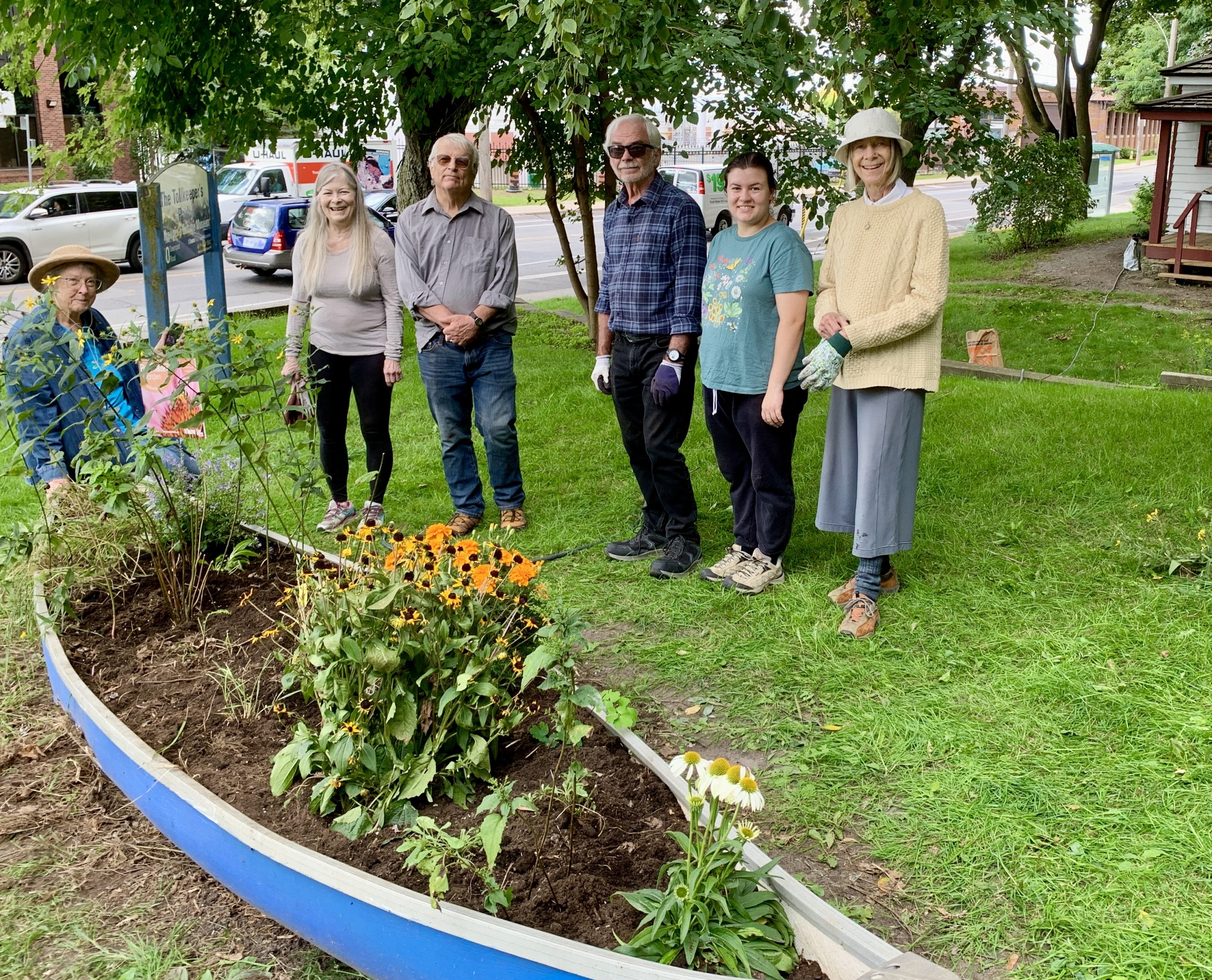
again in fall, we work on the garden and the grounds — weeding the beds of tansy
and rudbeckia, general tidying, and clearing between the logs of our sample corduroy
road, the kind of log roadway the tolls once paid to keep passable. Members are welcome
at these too. And in February we hold a mending month, when visitors can bring in a
favourite sweater to be mended, and we knit pieces that are sold at the Cottage.
Repairs come up as they come up, and volunteers with carpentry or painting skills can help.
Workdays are often announced in
our newsletter and on the front page.
The garden and the grounds
The beds are planted mostly with native species, and they need weeding, watering and replanting through the season. No experience needed — someone will show you what is a plant and what is a weed.
Repairs and maintenance
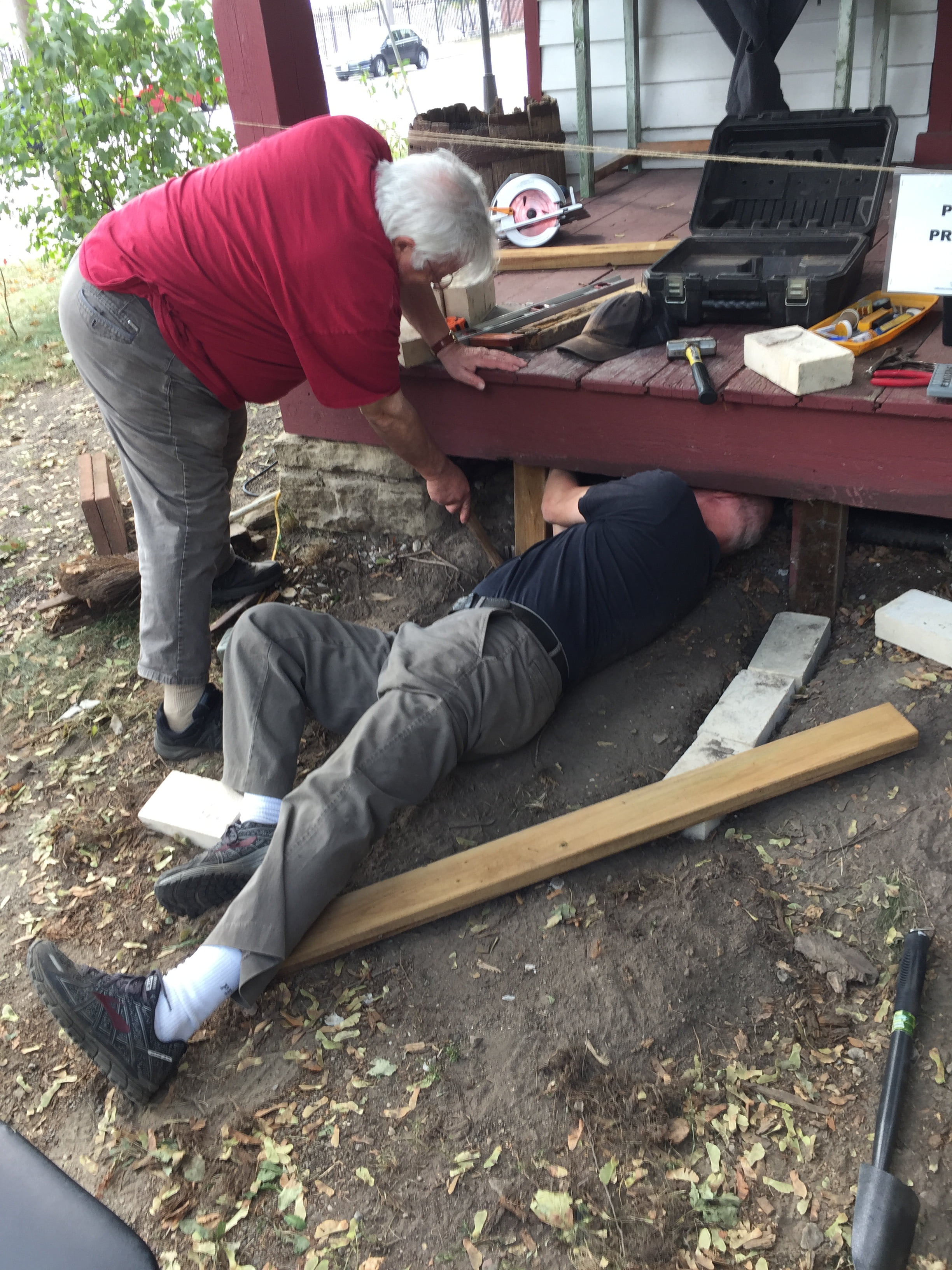
A building this old always needs something. Volunteers with carpentry, painting or general handy skills have repaired the porch, laid walkways and kept the place standing. Some jobs go to trades; plenty do not.
Behind the scenes
Social media and the web site need input. The newsletter needs writing and photographs need taking. Events need planning, and Cookie Day needs bakers. If you have a skill you would like to put to use, we would like to hear about it.
Students
High-school students earn their community service hours with us, and some stay on well past the requirement.
Interested in any of these? Write to us at tollkeeperscottage@gmail.com and tell us roughly what you would enjoy doing and when you are usually free. A volunteer will write back — there is no form to fill in and no commitment at this stage.